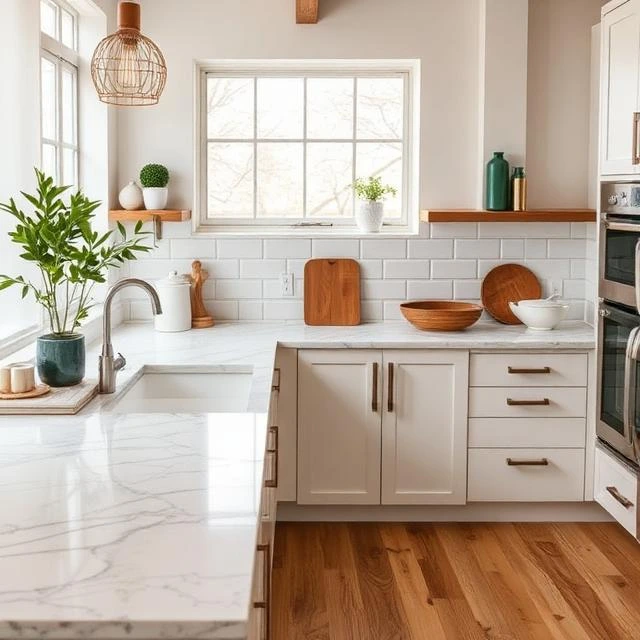
Countertop replacement service

Countertop Replacement Palm Springs & Inland Empire

Kitchen & Bathroom Countertop Removal and Installation

Quartz, granite, marble, laminate, and more. We remove the old countertop and install the new one with precise templating, clean seams, and proper sink cutouts.

Quartz
most popular
Granite
natural stone
Removal
included
Sink Cutouts
precise fit

Countertop Material Options

Each material has real trade-offs. Here's what homeowners should know before choosing.

Quartz (Engineered)

The most popular choice in kitchens today. Made from ~93% ground quartz bound with resins. Non-porous — no sealing ever needed. Consistent pattern and color throughout. Highly resistant to staining, scratching, and bacteria. Not recommended for outdoor use (UV degrades the resins) and can be damaged by excessive heat from pots directly on the surface.

High
Durability
No seal
Maintenance
Medium
Heat resist.

Granite

A natural igneous stone with unique patterning — no two slabs are identical. Very hard and heat-resistant (hot pots are fine). Requires sealing once a year or when water no longer beads on the surface. Some granite is more porous than others — lighter colors tend to need more maintenance than darker slabs.

High
Durability
Annual seal
Maintenance
High
Heat resist.

Marble

Stunning and timeless but high-maintenance. Marble is porous, softer than granite, and etches easily from acids (lemon juice, vinegar, wine). Best in bathrooms and low-traffic kitchen areas or baking stations. Requires regular sealing and careful cleaning products. The natural veining is unmatched aesthetically.

Medium
Durability
High care
Maintenance
Medium
Heat resist.

Porcelain Slab

Large-format porcelain tile processed into countertop slabs. Virtually non-porous, UV-stable (unlike quartz — works outdoors), scratch-resistant, and extremely heat-tolerant. Available in marble, concrete, and stone looks. Heavier and harder to fabricate than stone, which limits edge profile options somewhat.

Very high
Durability
No seal
Maintenance
Very high
Heat resist.

Butcher Block

End-grain or edge-grain hardwood slabs — maple is most common. Warm, natural appearance. Can be sanded and refinished if damaged. Needs regular oiling (food-safe mineral oil) to prevent drying and cracking. Avoid near sinks where standing water can cause warping. Popular in kitchens that want warmth and character.

Medium
Durability
Oil monthly
Maintenance
Low
Heat resist.

Laminate

A printed surface bonded to a particleboard core. The most affordable option and the most improved over the years — modern laminates convincingly mimic stone, wood, and concrete. Lightweight, easy to install, and available in hundreds of patterns. Vulnerable to heat and moisture at edges and seams. Not resurfaceable.

Medium
Durability
Very easy
Maintenance
Low
Heat resist.

Edge Profiles

The edge profile defines the character of the countertop. Some are classic, some are modern, some add drama.

Eased / Straight

Square edge with a very slight softening. Clean, contemporary, and the most common today. Works in modern, transitional, and traditional kitchens.

Beveled

Angled cut on the top edge, usually at 45°. Adds visual interest without being ornate. Popular in modern and transitional kitchens.

Bullnose

Fully rounded top edge. Soft and traditional. Safe — no sharp corners — which makes it popular in homes with young children.

Ogee

An S-curve profile — classic and ornate. Associated with formal, traditional, and Mediterranean-style kitchens. Adds elegance but feels dated in ultra-modern spaces.

Waterfall

The countertop material continues straight down the end panel(s) of the cabinet to the floor. A bold modern statement most often seen on kitchen islands. Requires additional material.

Thickness Options

Countertop thickness affects the look, weight, and structural requirements.

2cm (3/4")

Lighter and less expensive. Requires a full plywood substrate underneath for support — cannot span a gap unsupported. Most laminate and some stone installations use 2cm.

3cm (1-1/4")

The standard for stone and quartz countertops. Heavier, more substantial appearance, and structurally self-supporting across normal cabinet spans. Looks more luxurious and handles edge profiles better. Most fabricators prefer 3cm.

Sink Compatibility

Countertop replacement often involves the sink — here's what to know:

Undermount Sink

Mounted below the countertop surface. Requires a solid stone or engineered material (not laminate). Cleaner look — no rim to collect debris. The countertop must be cut with a precise edge that will be visible.

Drop-In Sink

Self-rimming — drops into a cutout with a rim resting on the countertop surface. Works with any countertop material including laminate. Easier to install but the rim edge collects water and requires regular cleaning.

Standard Overhangs & What They Mean

Overhang is how far the countertop extends past the cabinet face. It affects usability and appearance.

1–1.5"

Standard Perimeter

Standard overhang on wall-side countertops. Keeps the countertop clear of the cabinet door and drawer faces.

12"

Breakfast Bar

Allows for seating at a standard stool height on the open side of an island or peninsula.

15–18"

Counter Height Seating

Comfortable knee clearance for counter-height chairs. At this overhang, corbels or hidden supports are needed for stone to prevent cracking.

Common Questions

How long does countertop replacement take?

Installation day takes 1–2 days once the new countertop is on-site. For stone and quartz, the full process is 1–2 weeks: template, fabrication at the shop, then install. Laminate is faster — prefabricated sections can often be installed within a few days of ordering.

Do I need a plumber?

If you're replacing the sink simultaneously, yes — a plumber disconnects and reconnects the supply lines and drain. If the existing sink is being reused, the plumbing work is minimal. We coordinate licensed plumbers on jobs that require it.

What's the difference between quartz and quartzite?

Quartz is engineered (man-made, non-porous, no sealing needed). Quartzite is a natural stone that looks like marble but is much harder. Quartzite is porous and needs periodic sealing. Both are excellent materials — the choice comes down to preference for natural stone variation vs. engineered consistency and zero maintenance.

How do I care for my new countertop?

Quartz and porcelain: clean with mild soap and water, avoid harsh chemicals, use trivets for hot pots. Granite and marble: same cleaning rules, plus seal annually. Butcher block: oil monthly with food-safe mineral oil. Avoid cutting directly on any countertop surface — use cutting boards to extend the finish life.

Get a Free Countertop Quote

Tell us the material, approximate linear footage, and location and we'll follow up quickly.