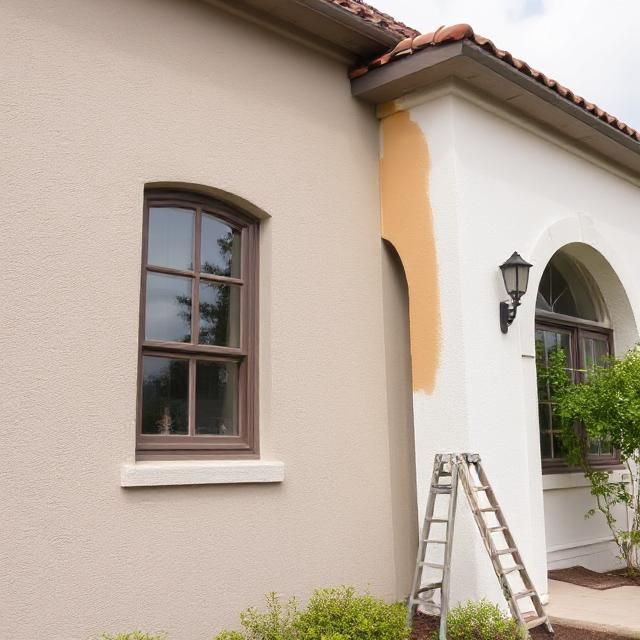
Exterior Painting • Palm Springs & Inland Empire
Proper prep, quality primer, and paint selected for heat and UV resistance. We work stucco, wood, block, and trim across Coachella Valley and Inland Empire homes.
Palm Springs and the Coachella Valley are among the hardest climates for exterior paint in the country. Sustained summer temperatures above 110°F, intense UV radiation, and extreme daily temperature swings (sometimes 40°F between day and night) all stress the paint film.
Heat causes paint to expand and contract repeatedly, eventually leading to cracking, chalking, and peeling — especially on south- and west-facing walls that take the brunt of afternoon sun. Stucco, which is porous, is particularly vulnerable because moisture enters and exits through the surface constantly.
Paint is only as good as the surface under it. Rushing prep is the #1 reason exterior paint fails early.
Remove dirt, dust, chalking, and loose paint. Stucco in the desert accumulates significant dust and airborne mineral deposits that must come off before painting.
Any peeling or flaking paint must be mechanically removed. Painting over loose paint is the most common amateur mistake — it always fails.
Hairline and stucco cracks are patched with matching materials and feathered smooth. Larger structural cracks are documented before painting.
Gaps around windows, doors, trim, and penetrations are caulked with a paintable exterior sealant. This is critical for energy efficiency and moisture prevention.
Bare patches, repaired areas, and bare wood always get primed before the finish coat. Skipping primer leads to uneven sheen and early failure at patches.
Landscaping, windows, doors, and hardscape are masked or covered. We leave the job site in the same condition we found it.
Not all exterior paints perform the same in desert conditions. Here's what matters:
The gold standard for stucco in hot climates. Elastomeric paint is 5–10x thicker than standard paint and remains flexible through temperature cycles. It bridges hairline cracks and creates a waterproof barrier. The best choice for older stucco homes with a history of cracking. Lasts 10–15 years with proper prep.
The most widely used exterior paint. High-quality 100% acrylic formulas offer excellent UV resistance, flexibility, and breathability. Breathability is important for stucco — it allows trapped moisture to escape rather than push the paint off. Look for products with UV-resistant pigments and a high-solids content.
Color is more than aesthetics in the desert — it has a measurable impact on interior temperatures.
White, cream, light tan, pale grey, and warm off-whites reflect the most solar radiation. A light-colored exterior can reduce wall surface temperatures by 20–30°F compared to dark colors, which translates to lower AC loads and reduced paint degradation.
Dark colors can look dramatic and work well in shaded areas, on accent walls, trim, and garage doors. Avoid dark colors on large south- or west-facing wall expanses in the desert — heat buildup accelerates paint degradation and can warp trim and doors.
California's Title 24 has cool roof standards. Many paint manufacturers now offer "cool color" formulations — darker colors that still meet reflectance requirements by using special pigments. If you want a darker home without the heat penalty, ask about cool-color options.
Many Coachella Valley communities have HOA-approved color palettes. We can help match existing approvals or work with new color selections. Always confirm with your HOA before committing to a color change.
The most common exterior in the desert. Requires clean prep and the right paint system for longevity.
Fascia, soffits, window trim, shutters, and wood siding. Needs flexible, penetrating primers.
CMU block walls, retaining walls, and foundations. Masonry sealer or block filler before paint.
High-use surfaces that need durable semi-gloss or satin finishes for washability.
Most desert homes need repainting every 5–8 years with standard acrylic paint. With elastomeric coating on stucco, you may get 10–12 years. South- and west-facing walls typically degrade faster and may need attention sooner than north-facing surfaces.
A typical single-family home takes 2–4 days: one day for prep and priming, one to two days for painting, and touch-ups at the end. Larger or more complex homes with extensive trim work or multiple stories take longer.
Yes, with scheduling adjustments. We work early mornings when temperatures are lower and avoid painting surfaces in direct afternoon sun above 90–95°F. Most quality exterior paints have application temperature ranges of 50°F–90°F on the surface being painted.
Elastomeric is far thicker (applied at 15–20 mils dry vs. 2–4 mils for standard paint) and remains flexible when cured. It bridges hairline cracks and provides a waterproof barrier. It costs more but lasts much longer on stucco and is the better long-term value for desert homes.
Tell us your surface type, approximate square footage, and location.