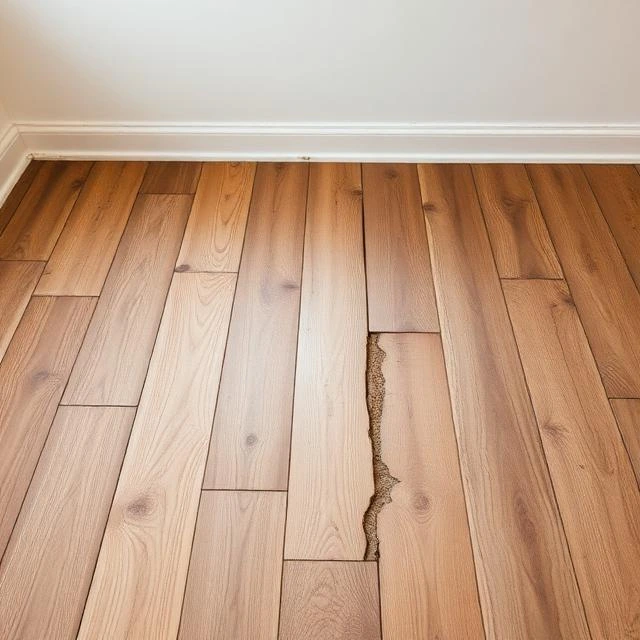
Floor repair service

Floor Repair Palm Springs & Inland Empire

Floor Repair for Hardwood, Tile, Laminate & More

Cracked tiles, warped boards, squeaky floors, and damaged sections repaired and blended back to match. We work with all residential flooring types across Palm Springs and the Inland Empire.

Tile
crack & chip repair
Hardwood
board replacement
Laminate
section swap
Subfloor
squeaks & soft spots

Flooring Types We Repair

Each material has different repair requirements — here's what to know.

Hardwood

Solid hardwood boards can often be sanded, refinished, or individually replaced. Matching requires finding the same species, width, and stain. Desert AC cycling causes hardwood to shrink and expand, which can create gaps and squeaks that are addressable without full replacement.

Engineered Hardwood

A plywood core with a real wood veneer top layer. More stable than solid wood in desert conditions because the cross-ply construction resists expansion. Individual planks can be replaced if the product is still available. Minor surface scratches can sometimes be addressed with refinishing depending on veneer thickness.

Laminate

Photo-printed surface over a fiberboard core — cannot be sanded or refinished. Damaged sections must be replaced. Floating laminate floors can often be disassembled from an edge to reach the damaged section. Glued-down laminate requires cutting out damaged planks and carefully matching the replacement.

Ceramic & Porcelain Tile

Individual tiles can be removed and replaced when cracked. The challenge is always matching the existing tile — color, size, texture, and finish must all be close. Grout matching is also part of the repair. Desert thermal expansion makes cracked tile floors common.

Vinyl Plank (LVP)

One of the most repair-friendly floor types. Floating LVP can be disassembled from the wall edge to reach and replace damaged planks without disturbing the whole floor. Click-lock profiles make individual plank swaps fast and clean when a matching product is available.

Natural Stone

Travertine, slate, and marble tiles are repairable when cracked or chipped. Travertine is common in desert-region homes and develops hairline cracks from thermal movement. Chips can be filled with color-matched epoxy. Full tile replacement requires finding matching material, which can be challenging for older installations.

Common Floor Damage We Fix

Cracked Tile

Single tiles cracked from impact, thermal expansion, or void beneath (no mortar backing). One to several tiles removed and replaced.

Warped / Cupped Boards

Wood boards that have lifted or cupped at the edges from moisture or humidity changes. Usually indicates a subfloor or moisture issue that must be resolved first.

Squeaky Floors

Boards rubbing against fasteners or each other. Can often be fixed from above with screws driven at the right angle, or from below if a crawl space is accessible.

Gaps Between Boards

Common in desert climates where low winter humidity causes wood to shrink. Seasonal gaps are normal; persistent large gaps may need filler or board replacement.

Scratches & Surface Damage

Deep scratches on hardwood can be sanded and refinished spot-by-spot or across the full floor depending on severity. LVP and laminate scratches require section replacement.

Soft Spots & Subfloor Damage

Soft, spongy areas underfoot indicate subfloor damage — usually from water. The flooring above and damaged subfloor panels must be removed and replaced before new flooring goes back down.

Desert-Specific Floor Problems

The Coachella Valley and Inland Empire have floor conditions you won't see in most other climates.

Tile Cracking from Thermal Expansion

Slab-on-grade construction (standard in the desert) means the concrete slab expands significantly in summer heat. Without proper expansion joints and flexible grout, tiles crack as the slab moves. This is the most common floor repair we see in desert homes — cracked tile in high-sun rooms, south-facing spaces, and near exterior walls.

Wood Warping from AC Cycling

Hardwood floors in desert homes face an unusual stress: extreme outdoor heat combined with aggressive air conditioning creates dramatic humidity swings inside the home. AC units in the desert strip moisture aggressively, then the system cycles off and indoor humidity recovers. This constant cycling causes wood to expand and contract repeatedly, leading to warping, cupping, and squeaks.

Grout Cracking and Disintegration

Sanded cement grout in high-traffic desert homes tends to crack and crumble faster than in temperate climates due to thermal stress and the gritty desert dust that acts as an abrasive. Re-grouting individual areas or entire floors is often the right fix before the broken grout allows water and debris under tiles.

Spot Repair vs. Section Replacement

Spot Repair

One to a handful of damaged tiles, boards, or planks. Clean, targeted work with minimal disruption. Works well when matching material is available and the surrounding floor is in good condition.

Section Replacement

A defined section — a hallway, one room, one area — is fully removed and replaced with matching or complementary material. Better than spot repair when damage is spread across an area or when a perfect match isn't possible.

When Repair Isn't the Answer

If the damaged area covers more than roughly 30–40% of the total floor, if the subfloor is widespread, or if the product has been discontinued with no viable match, full replacement is usually the more practical and cost-effective path. We'll tell you honestly which makes sense for your situation.

Common Questions

Can you match old or discontinued tile?

Sometimes yes, sometimes no. We check surplus tile suppliers and specialty stores first. If we can't find an exact match, we'll show you close visual alternatives. If nothing works, a creative solution like a new accent border is sometimes the best outcome.

What causes squeaky floors and can they be fixed?

Squeaks come from boards rubbing against nails, each other, or the subfloor. The fix depends on access — from below in a crawl space is cleanest, but we can also address squeaks from above on hardwood and some other floor types. Not every squeak can be eliminated 100%, but most can be significantly reduced.

When should I replace instead of repair?

Repair is the right call for isolated damage with available matching material. When damage covers a large percentage of the floor, the product is discontinued, or the subfloor is compromised, replacement makes more sense economically and practically.

Do I need to move furniture for a floor repair?

For spot repairs, usually only furniture in the immediate repair area needs to move. For section replacements, we'll let you know the area that needs to be cleared. We can help move standard furniture items as part of the job.

Get a Free Floor Repair Quote

Describe the damage, flooring type, and we'll get back to you promptly.