Tile Work • Palm Springs & Inland Empire
Clean layouts, tight grout lines, and the right tile system for indoor and outdoor applications across the Coachella Valley and Inland Empire.
Material choice affects appearance, durability, maintenance, and how the tile performs in each application.
Made from clay, glazed and fired. More porous than porcelain and best suited for dry or low-moisture interior walls and backsplashes. Easy to cut, wide range of sizes and colors. Not recommended for heavy-duty floors or outdoor use.
Denser, harder, and less porous than ceramic. Water absorption under 0.5% makes it ideal for wet areas and outdoor applications. Available in large formats that mimic stone or wood. The most versatile tile type — works everywhere.
A natural limestone with a distinctive pitted, organic surface. Very popular in desert-region homes and Mediterranean-style architecture. Porous — must be sealed before and after grouting and annually thereafter. Warm beige, ivory, and walnut tones complement desert interiors beautifully.
A dense, natural stone with a layered surface and earthy tones — greens, greys, blacks, and reds. Naturally textured surface provides excellent slip resistance. Variation in thickness can make installation more complex. Sealing recommended.
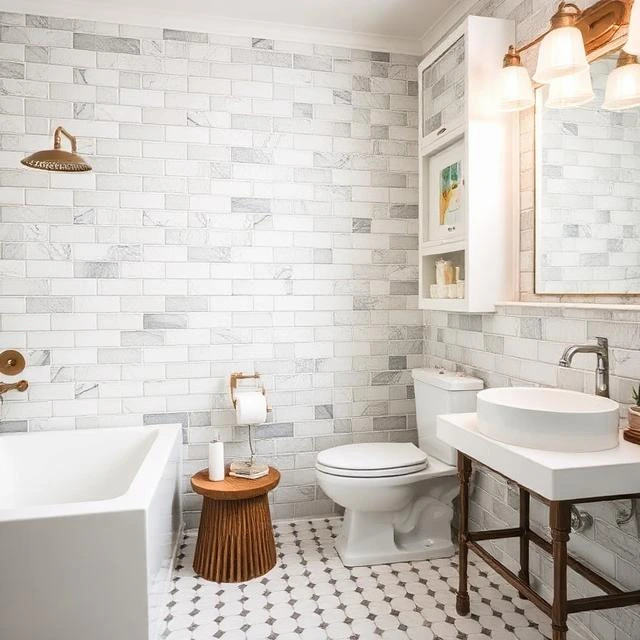
Classic and elegant, but requires care. Marble is porous, scratches relatively easily, and etches when exposed to acidic cleaners. Best in low-traffic areas and decorative applications. Stunning in bathrooms and entryways when properly maintained.
Small glass tiles typically mounted on mesh backing. Brilliant color, reflective surface, and non-porous. Perfect for accent strips, backsplashes, and shower niches. Requires white or non-staining thinset to avoid color showing through. Needs unsanded grout to avoid scratching the glass.
Size has a big impact on visual scale, grout line frequency, and installation complexity.
Intricate patterns, many grout lines. Used for shower floors (more grout lines = more traction), backsplash accents, and pool surrounds. Mesh-mounted for efficient installation.
A timeless classic. Most common on kitchen backsplashes and shower walls. Versatile in both traditional and modern settings depending on grout color and pattern orientation.
The most common floor tile size. Efficient to install, works in most rooms. 18×18 feels larger and has fewer grout lines — good for rooms where you want a cleaner look.
Creates a dramatic, high-end look with minimal grout lines. Requires a very flat substrate — even minor deflection or unevenness causes lippage (tiles not level with each other). Installation takes more skill and specialized tools.
Mimics wood plank flooring in a tile format. Popular in bathrooms and kitchens where wood would be vulnerable to moisture. Installed in offset patterns like real wood.
Grout choice is one of the most overlooked decisions in tile work. It affects durability, maintenance, and appearance.
Contains fine sand for added strength. Used for joints 1/8" or wider. Standard for most floor tile and wall tile with wider grout lines. The sand makes it strong enough to resist cracking in wider joints. Do not use on glass tile or polished stone — the sand scratches the surface.
Smooth formula for joints under 1/8". Required for glass mosaic tile and polished marble to prevent scratching. Also used for vertical tile where sanded grout tends to slide before setting. Shrinks more than sanded, so only appropriate for narrow joints.
A two-part system that cures chemically rather than drying. Virtually non-porous, stain-resistant, and can last 20+ years without sealing. The premium choice for kitchen backsplashes, commercial kitchens, and any area exposed to grease, chemicals, or heavy staining. More expensive and harder to work with — installation must be fast and precise as it sets quickly.
Porcelain and ceramic for indoor; rated porcelain, travertine, or natural stone for outdoor. Slip resistance rating (COF) is critical for wet areas and pool surrounds.
Shower installations require a proper waterproofing membrane behind the tile. We use cement backer board or waterproof membrane systems — never standard drywall in wet areas.
Subway tile, mosaic, and natural stone are all popular. Backsplashes behind cooktops need heat-resistant materials; glass tile near high heat may crack.
Exterior-rated tile with appropriate slip resistance (wet COF 0.60+). Lighter colors help with heat in the desert. Large-format porcelain pavers are increasingly popular for modern outdoor spaces.
Pattern changes the feel of a room significantly, even with the same tile.
Tiles aligned in a square grid. Clean and efficient. Highlights very square, even tiles but shows any slight size variation.
Each row offset by half a tile length. The classic subway tile pattern. Very forgiving of slight size variation and works in most applications.
Tiles set at 45° angles in a V-pattern. Dynamic visual interest. Popular for backsplashes, entryways, and accent walls. Requires more cuts and time to install.
Tiles set at 45° to the walls. Makes a room feel larger and adds visual movement. Requires more cuts at every wall edge.
8–15 years for cement-based grout in high-traffic areas; longer with annual sealing. Epoxy grout can last 20+ years. In desert climates, thermal expansion can shorten grout life in slab-on-grade floors — proper expansion joints and flexible grout near transitions help.
Technically possible, but usually not recommended. The extra height changes door clearances and creates transition issues. More importantly, any loose tile underneath will cause the new layer to fail. In most cases, removing the old tile produces a better long-term result.
Porcelain uses denser clay fired at higher temperatures, producing a harder, less porous tile with water absorption under 0.5%. Ceramic is softer, more porous, easier to cut, and better suited to dry interior walls and low-traffic floors. Use porcelain anywhere moisture, heavy traffic, or outdoor conditions are a factor.
Exterior-rated porcelain with a slip-resistant surface is the practical top choice. Travertine works well and looks great but needs regular sealing. For large patios, consider porcelain pavers in lighter colors — they stay cooler underfoot and require minimal maintenance in the desert climate.
Tell us the application, size, and material you're considering and we'll get back to you quickly.