Hot water, spa rooms and older homes in Desert Hot Springs
Desert Hot Springs is known for its hot mineral water, and many homes have hot tubs, spa rooms or indoor pools. Warm water in an enclosed room adds a lot of humidity, and without enough ventilation that moisture settles on the ceiling, the walls and inside the framing.
The city also has many older homes and small rentals with original plumbing, evaporative coolers and roofs that have seen a lot of wind-driven rain. We look at the whole picture: where the water comes from, how the room is vented and what needs to be removed and rebuilt.
Where we find mold in Desert Hot Springs homes
- Spa rooms and enclosed hot tubs: Warm, humid air condenses on cooler surfaces. Ceilings and exterior walls in these rooms are the first place mold shows up.
- Swamp cooler ducts and roof jacks: Evaporative coolers that leak at the roof or ducts that drip can wet the attic and ceiling.
- Wind-driven rain: Strong winds push rain sideways into window frames, door thresholds and stucco cracks on the windward side of the house.
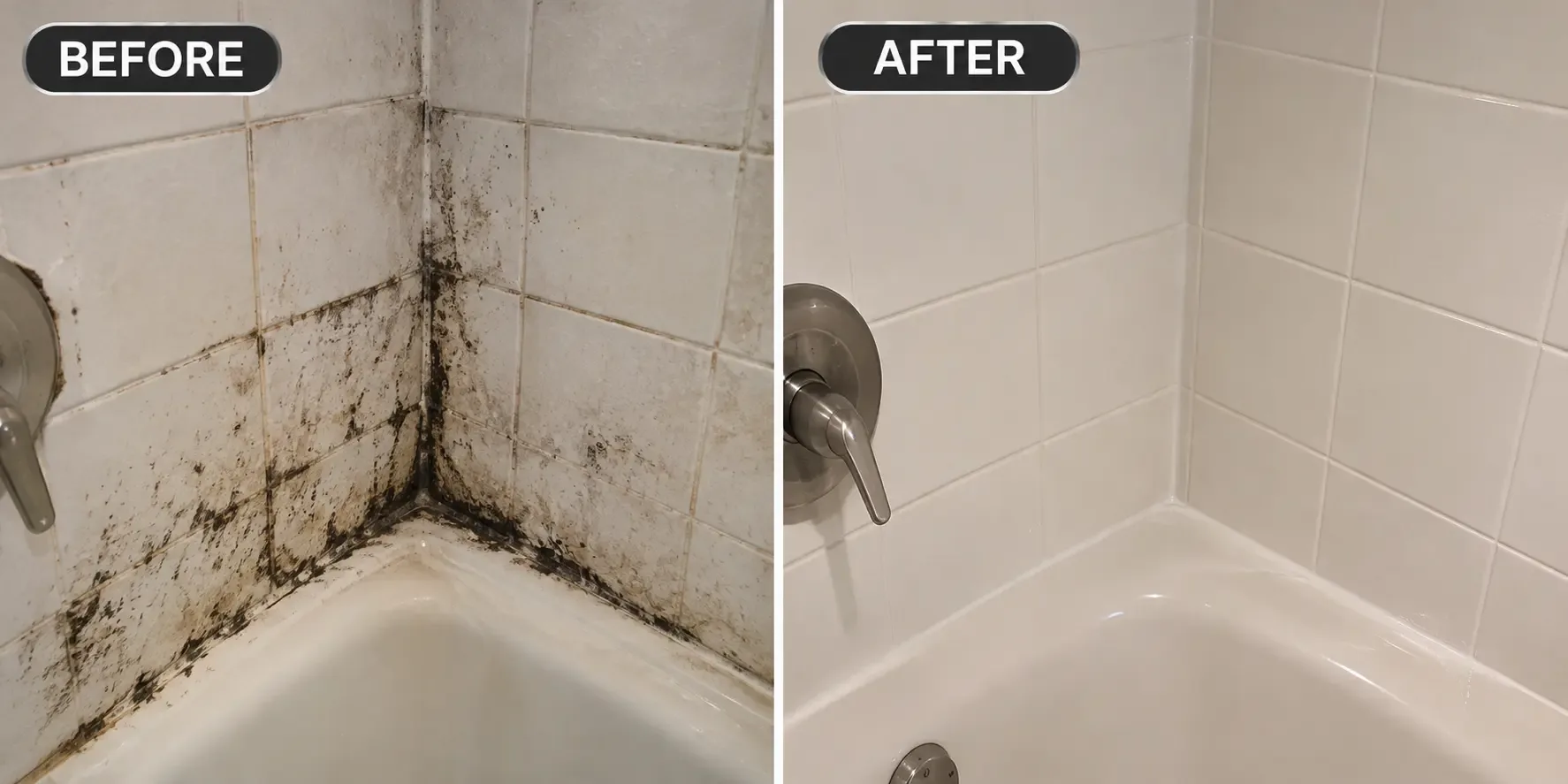
- Older bathrooms: Original tile and tub surrounds with cracked grout let water into the wall every time the shower runs.
How we handle mold in Desert Hot Springs
1. Inspect and test
We look at the affected area, take moisture readings to see how far the water went, and test when it helps answer a question. If you already have a report from an independent inspector, we work from it.
2. Find and fix the water
Mold comes back if the moisture does. We find the leak, condensation or drainage problem and fix it as part of the job.
3. Contain and remove
We seal off the work area, remove moldy drywall, insulation and other porous materials, and clean the remaining surfaces with HEPA vacuums and an antimicrobial treatment.
4. Dry, check and rebuild
We confirm the area is dry before closing it up, then rebuild: drywall, insulation, paint, baseboards, cabinets or flooring, so the room is finished when we leave.
Desert Hot Springs mold removal FAQ
I have a hot tub in an enclosed room. How do I keep mold out?
Ventilation is the main thing: an exhaust fan sized for the room, a cover on the tub when it's not in use, and moisture-resistant materials on the walls and ceiling. If mold is already there, we remove the affected materials and can rebuild with better-suited materials and ventilation.
Do you work on rental homes in Desert Hot Springs?
Yes, on residential homes. If you have tenants, we can explain the work and the schedule and plan the job so the home stays livable where possible.
My ceiling stain only appears after windy storms. Why?
Wind-driven rain gets into places normal rain doesn't, like the edges of roof jacks, window heads and stucco cracks. We trace it back to the entry point, fix it, and take care of any mold and water damage inside.
What affects the cost of mold removal?
The cost depends on your home: how large the affected area is, which materials are involved (drywall, insulation, cabinets, flooring), how hard it is to reach, whether testing is needed, what it takes to fix the water source, and how much rebuilding is needed afterward. Because no two homes are the same, we don't publish one-size-fits-all prices. We'll visit your home, inspect, and give you personalized pricing with a free on-site estimate. Call or text (951) 292-0703.
Can I just clean mold with bleach?
On a small spot on a hard surface, like tile, cleaning is often fine. On porous materials like drywall, wood and insulation, bleach doesn't reach the mold growing inside the material, and the moisture problem is still there. The EPA's guidance is to fix the water problem, clean hard surfaces, and remove porous materials that are moldy. For areas larger than about 10 square feet, a professional is recommended.