Indio's heat keeps the AC running, and the AC makes water
Indio is one of the hottest cities in the valley, and AC systems there can run most of the day for months. An AC that runs that much makes a lot of water as it pulls moisture out of the air. When the condensate line clogs or the pan cracks, the water has to go somewhere, usually into the closet floor, the wall or the ceiling below an attic unit.
Many neighborhoods, from Terra Lago to the country club communities, were built in the 2000s, and those homes are now old enough for water heaters, supply lines and window seals to start failing. Festival-season rentals add another risk: busy weeks of heavy use, then long stretches where nobody is home to notice a leak.
Where we find mold in Indio homes
- Attic and closet AC units: A clogged condensate line on an attic unit drips into the ceiling. On closet units it soaks the floor and the bottom of the walls.
- Water heaters: Water heaters from the original build are reaching the end of their life, and a slow leak at the base can wet the garage wall or the closet.
- Window frames: Hot outside, cold inside: on aluminum frames and failed dual-pane windows, condensation runs down onto the sill and the drywall below.
- Short-term rentals between festivals: A leak that starts the week after the festival can run for a long time before the next guest arrives.
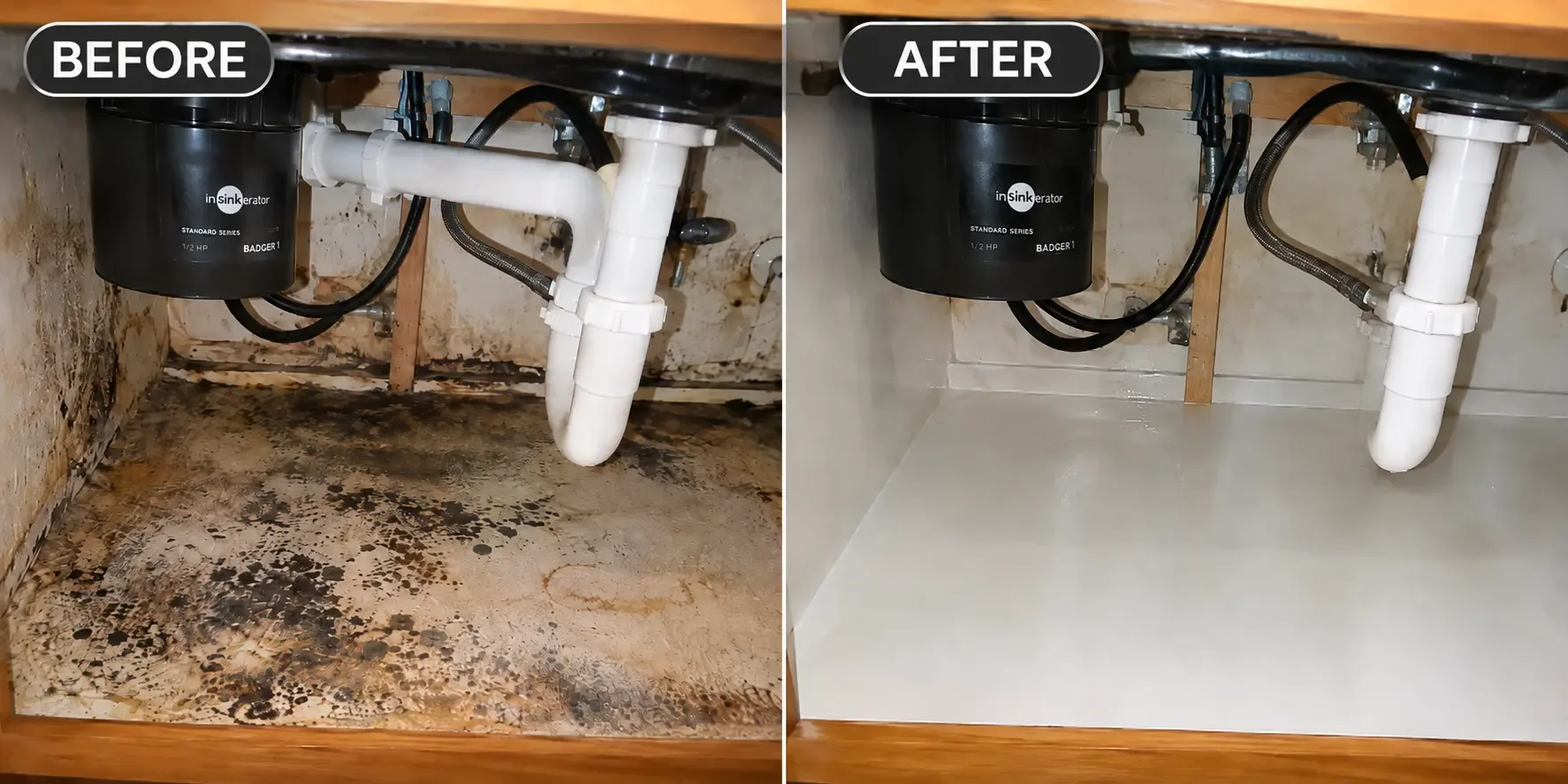
How we handle mold in Indio
1. Inspect and test
We look at the affected area, take moisture readings to see how far the water went, and test when it helps answer a question. If you already have a report from an independent inspector, we work from it.
2. Find and fix the water
Mold comes back if the moisture does. We find the leak, condensation or drainage problem and fix it as part of the job.
3. Contain and remove
We seal off the work area, remove moldy drywall, insulation and other porous materials, and clean the remaining surfaces with HEPA vacuums and an antimicrobial treatment.
4. Dry, check and rebuild
We confirm the area is dry before closing it up, then rebuild: drywall, insulation, paint, baseboards, cabinets or flooring, so the room is finished when we leave.
Indio mold removal FAQ
How often should I have my AC condensate line cleared in Indio?
At least once a year, ideally before summer. Many units have a safety switch that shuts the AC off when the pan fills; if yours shuts off on a hot day, check the pan before you call for repair.
We rent our Indio home during festival season. How fast can mold be handled?
It depends on how far the water spread, but we give you a clear timeline at the estimate. Small areas can often be handled quickly; larger areas with rebuild take longer. We keep the work area sealed off so the rest of the home stays usable.
Is the black spotting around my window frames mold?
It can be. Condensation on window frames feeds mold on the sill, the caulk and the drywall below. We clean or replace the affected materials, and if the windows themselves are failing we can replace them too.
What affects the cost of mold removal?
The cost depends on your home: how large the affected area is, which materials are involved (drywall, insulation, cabinets, flooring), how hard it is to reach, whether testing is needed, what it takes to fix the water source, and how much rebuilding is needed afterward. Because no two homes are the same, we don't publish one-size-fits-all prices. We'll visit your home, inspect, and give you personalized pricing with a free on-site estimate. Call or text (951) 292-0703.
Can I just clean mold with bleach?
On a small spot on a hard surface, like tile, cleaning is often fine. On porous materials like drywall, wood and insulation, bleach doesn't reach the mold growing inside the material, and the moisture problem is still there. The EPA's guidance is to fix the water problem, clean hard surfaces, and remove porous materials that are moldy. For areas larger than about 10 square feet, a professional is recommended.