Mold in Palm Desert homes: AC water, irrigation and empty seasons
Palm Desert has a large number of seasonal residents and country club homes that are closed up from late spring to fall. The AC keeps running to protect the house, and that means a steady stream of condensate water. If the drain line clogs or the pan rusts through, the water goes into the closet, the wall and the subfloor, often for months before anyone notices.
The other common source is outside: sprinklers and drip lines that soak the stucco and the base of the walls day after day. Water that gets behind the stucco or under the slab edge can show up indoors as damp baseboards and a musty smell. We trace the water back to where it starts, fix it, remove the mold and rebuild the damaged area.
Where we find mold in Palm Desert homes
- Air handler closets: Overflowing condensate pans are one of the most common causes of mold we see in summer, especially in homes where nobody is there to hear the drip.
- Walls next to landscaping: Sprinklers aimed at the house, or planters built against the wall, keep the stucco wet. Over time that moisture reaches the framing and the drywall inside.
- Laundry rooms and water heaters: Washer hoses and water heaters in closets and garages fail without warning. A small, slow leak is worse than a burst one because it goes unnoticed.
- Guest bathrooms: Showers that are only used a few times a year still need ventilation. Steam with no exhaust fan, plus cracked grout, lets moisture into the wall behind the tile.
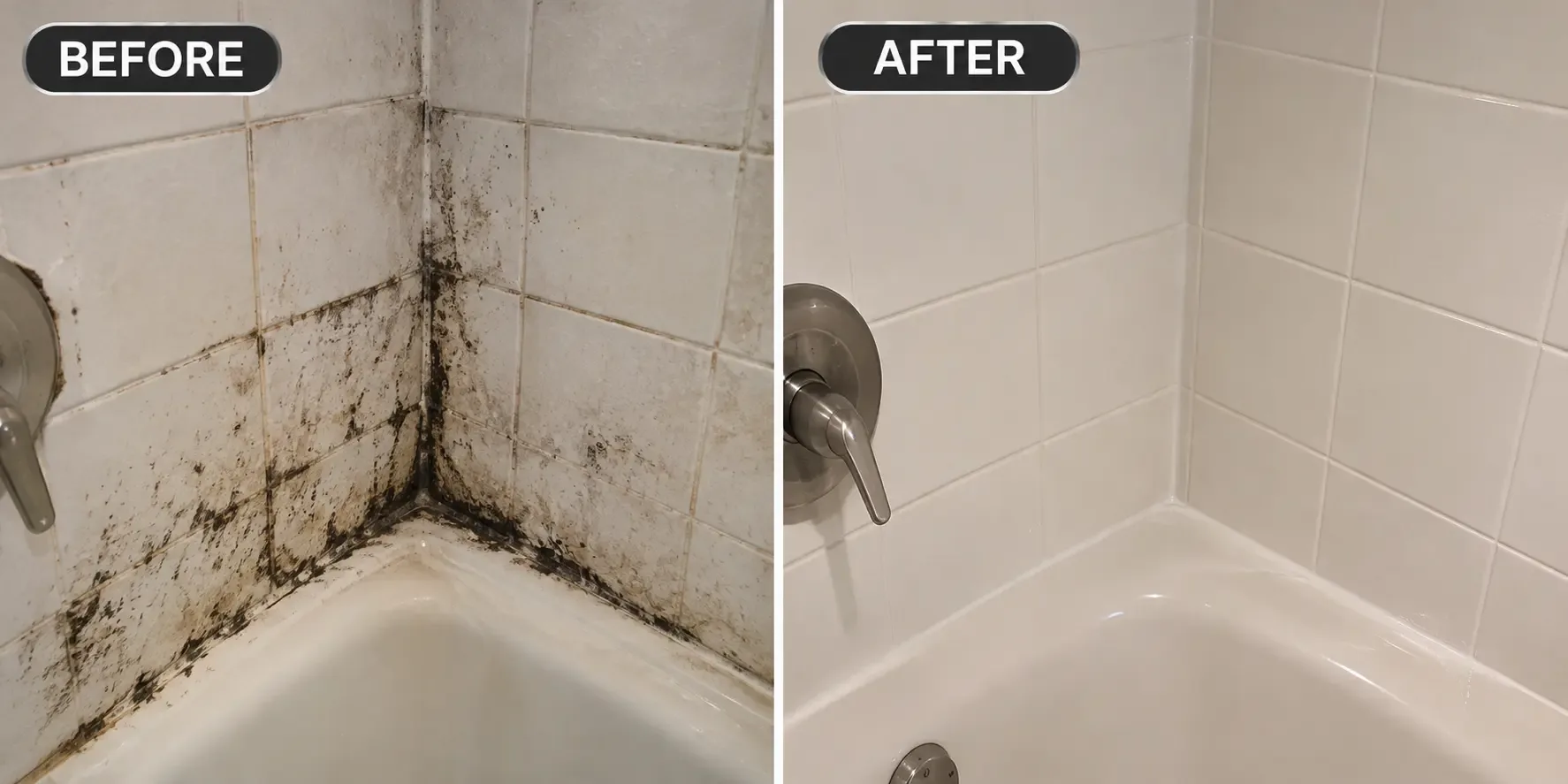
How we handle mold in Palm Desert
1. Inspect and test
We look at the affected area, take moisture readings to see how far the water went, and test when it helps answer a question. If you already have a report from an independent inspector, we work from it.
2. Find and fix the water
Mold comes back if the moisture does. We find the leak, condensation or drainage problem and fix it as part of the job.
3. Contain and remove
We seal off the work area, remove moldy drywall, insulation and other porous materials, and clean the remaining surfaces with HEPA vacuums and an antimicrobial treatment.
4. Dry, check and rebuild
We confirm the area is dry before closing it up, then rebuild: drywall, insulation, paint, baseboards, cabinets or flooring, so the room is finished when we leave.
Palm Desert mold removal FAQ
Can my HOA or country club require mold work to be done a certain way?
Some HOAs have rules about contractor hours, parking and work vehicles, and some require notice before work starts. Let us know your community's rules at the estimate and we'll plan the job around them.
I found water on the floor of my AC closet. Is that mold?
Not necessarily, but it is the kind of water that leads to mold if it has been happening for a while. Shut off the AC if water is still coming out, take photos, and have it looked at. We check the drywall, baseboard and subfloor with a moisture meter to see how far the water went.
Can sprinklers really cause mold inside the house?
Yes. When water hits the same wall every day, it can get behind the stucco or wick up the base of the wall. Inside, it shows up as peeling paint, swollen baseboards or a musty smell along an outside wall. We fix the inside and tell you exactly what to change outside so it stays dry.
What affects the cost of mold removal?
The cost depends on your home: how large the affected area is, which materials are involved (drywall, insulation, cabinets, flooring), how hard it is to reach, whether testing is needed, what it takes to fix the water source, and how much rebuilding is needed afterward. Because no two homes are the same, we don't publish one-size-fits-all prices. We'll visit your home, inspect, and give you personalized pricing with a free on-site estimate. Call or text (951) 292-0703.
Can I just clean mold with bleach?
On a small spot on a hard surface, like tile, cleaning is often fine. On porous materials like drywall, wood and insulation, bleach doesn't reach the mold growing inside the material, and the moisture problem is still there. The EPA's guidance is to fix the water problem, clean hard surfaces, and remove porous materials that are moldy. For areas larger than about 10 square feet, a professional is recommended.