Attic Insulation
The top priority for desert homes. Blown-in or batt at R-38 to R-49 for attic floors and rafters to block summer heat before it reaches living space.
Attic insulation • Spray foam • Blown-in • Air sealing — reduce your cooling costs and keep the desert heat out.
Based in Palm Springs, we complete insulation projects across surrounding Southern California communities.
Insured & bonded • Financing available
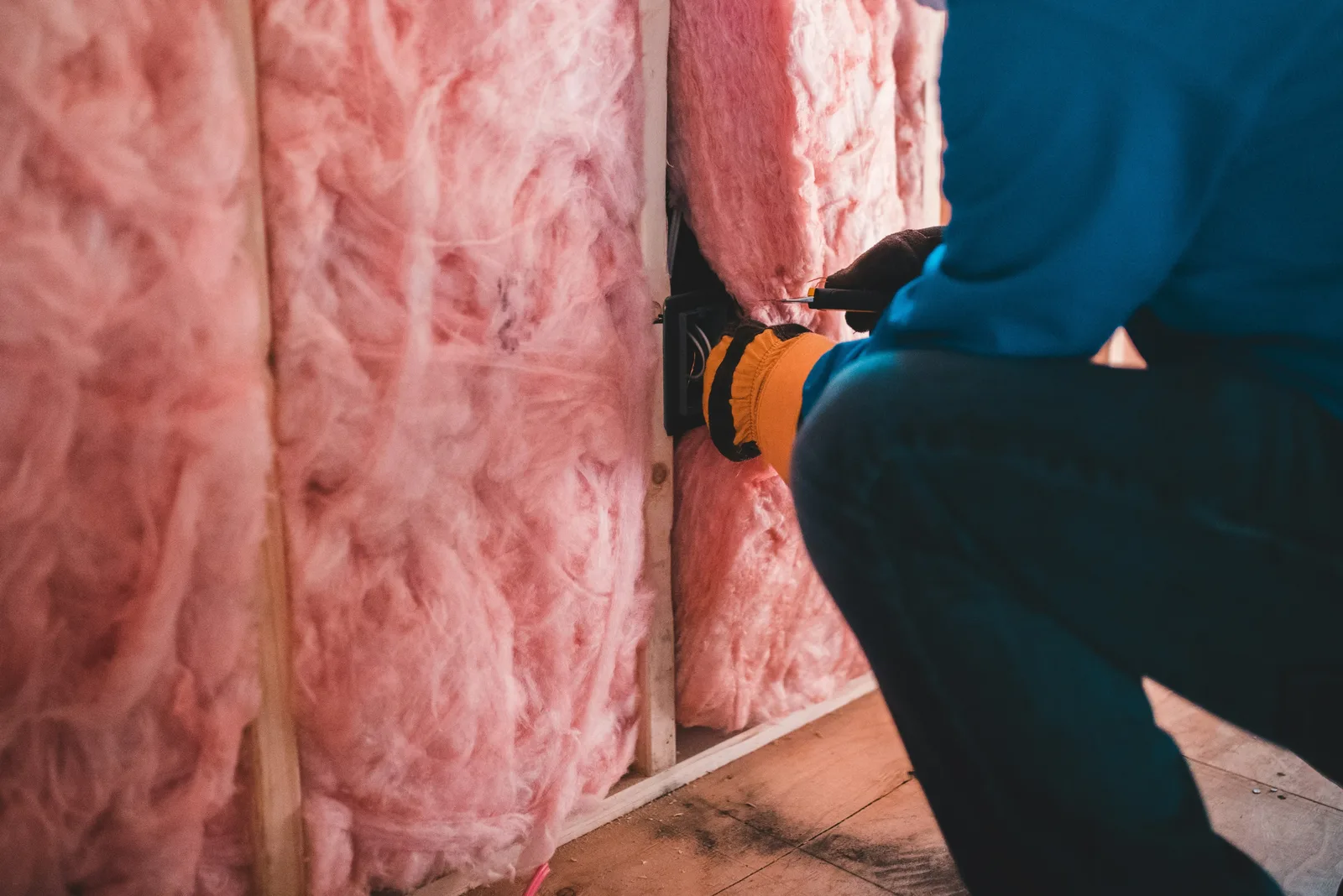
In the Coachella Valley, attic temperatures can reach 160°F in summer. Poor insulation transfers that heat directly into your living space, forcing your AC to work twice as hard. Proper insulation cuts cooling costs and improves comfort year-round.
Bundle insulation with HVAC or Cool Life Paint?
Insulation, HVAC upgrades, and reflective roof coating work together. We coordinate all three to maximize your energy savings in one project.
See all services →We provide home insulation services across Palm Springs and surrounding Southern California communities.
Every approach has a right fit — we recommend based on your home's construction.
The top priority for desert homes. Blown-in or batt at R-38 to R-49 for attic floors and rafters to block summer heat before it reaches living space.
Closed-cell spray foam for cathedral ceilings, rim joists, and tight areas where blown-in won't reach. Provides both insulation and an air barrier in one step.
Fast, even coverage for large attic floors. Cost-effective for homes with open attic access and no major air sealing issues.
Dense-pack blown-in for exterior walls without opening the drywall. Drilled from exterior or interior depending on home construction.
Sealing gaps around penetrations, attic hatches, recessed lights, and HVAC boots before insulating — because insulation without air sealing only does half the job.
Vapor barriers and under-floor insulation for homes with crawl spaces. Keeps moisture out and conditioned air in.
Insulation facts that change how you think about your home's energy use.
160°F+
Attic temperatures regularly reach this in Coachella Valley summers. Without adequate insulation, that heat conducts directly into your living space ceiling — forcing your A/C to run constantly.
40%
of a home's conditioned air can be lost through air leaks — not just through thin insulation. Air sealing is as important as the insulation material itself, and most homes have far more leaks than owners realize.
100×
Spray foam insulation expands up to 100 times its liquid volume when applied — filling cavities, gaps, and voids that batt insulation physically cannot reach.
R-49
The DOE's recommended attic insulation level for Climate Zone 15 (Palm Springs area) — significantly higher than what most older homes in the valley actually have installed.
Energy experts consistently rank attic insulation as the highest return home energy improvement available — especially in hot climates. The savings begin the day the job is complete and continue every month, every year, for the life of the home.
What is R-value?
R-value measures resistance to heat flow. Higher R = better insulation. Doubling R-value does not halve your energy use, but every R increment still matters — especially in extreme heat.
What does Palm Springs need?
DOE recommends R-38 to R-49 for attics in Climate Zone 15. Many older valley homes have R-11 or less — a massive gap that directly drives high summer utility bills.
Why air sealing comes first
Insulation slows conductive heat transfer. Air sealing stops convective transfer — air physically moving through gaps. Without air sealing, even high-R insulation underperforms because hot air bypasses it entirely.
Spray foam vs. blown-in
Spray foam provides both insulation and air sealing in one product. Blown-in is faster and less expensive for open attic floors but does not air-seal on its own — both have the right applications depending on your home's construction.
What homeowners ask us most — answered honestly.
Go into your attic (early morning before it heats up) and look at the attic floor. If you can see the tops of the floor joists, your insulation is below DOE recommendations — even a little bit of visible joist means you're underinsulated by desert standards. If your A/C runs nearly nonstop on hot days despite a reasonable thermostat setting, insufficient attic insulation is almost always a contributing factor. We can assess during a quick walk-through.
For open attic floors with good access, blown-in fiberglass is often the right choice — it covers large areas quickly and economically. Spray foam earns its premium in specific situations: cathedral ceilings where you cannot access the space above, tight cavities where blown-in cannot reach, around penetrations (pipes, wires, ducts) where air sealing is critical, and rim joists. The best approach often uses both — blown-in for the field and spray foam at the perimeter and penetrations.
Often yes, but not always alone. Hot rooms in summer are typically caused by a combination of: inadequate attic insulation above the room, solar heat gain through nearby windows, leaky ducts delivering less conditioned air than the system intends, or an HVAC system that is undersized for the home's layout. We diagnose the actual cause before recommending a solution — in some homes the fix is insulation, in others it is duct sealing or HVAC adjustment.
Flat-roof homes (common in Palm Springs design) present unique challenges. There is no attic space between the roof membrane and the ceiling — so the insulation layer is typically either on top of the roof deck or inside the ceiling cavity. Many mid-century flat-roof homes have very little insulation in this assembly. Adding tapered rigid foam insulation above the roof deck during a re-roof is one of the most effective upgrades possible for this home type.
Not always. If existing insulation is clean, dry, and pest-free, we can add new material on top — especially for blown-in attic applications. Removal is necessary when there is rodent or pest contamination (the smell never goes away through new insulation), moisture damage or mold, suspected asbestos-containing vermiculite (pre-1980 homes), or existing material that has settled below effective R-value. We assess during the initial inspection and tell you clearly what is needed and why.
A blower door test depressurizes the house and measures how much air is moving through the building envelope — quantifying air leakage in real terms. It is the most accurate way to identify where sealing is needed before insulation is installed. Some utility rebate programs require a blower door test to qualify. It is not required for every project, but for homes with high utility bills that don't seem to respond to other improvements, it often reveals the hidden cause.
Tell us what you're planning and we'll reach out fast.