Palm Springs mold usually starts with a leak nobody saw
Mold needs water, and in a city as dry as Palm Springs the water almost always comes from inside the house or through the roof: a slow leak under a sink, an AC condensate line that backs up, or a flat roof that holds water after a storm. Because the outdoor air is so dry, these problems tend to stay hidden inside walls, ceilings and closets until there is a smell or a stain.
Many Palm Springs homes are second homes or vacation rentals that sit closed for weeks at a time. A small leak that would be noticed in a day in a lived-in home can run for a whole summer in an empty one. We find the source, remove the affected materials and put the home back together so it is ready for the next visit or the next guest.
Where we find mold in Palm Springs homes
- Flat and low-slope roofs: Mid-century homes in neighborhoods like the Movie Colony, Twin Palms and Racquet Club Estates often have flat roofs. Ponding water and tired roof membranes leak into ceilings, and the mold grows above the drywall where you can't see it.
- AC closets and condensate lines: Air handlers in interior closets and attics drip constantly in summer. A clogged condensate line or a rusted drain pan soaks the closet floor and the wall behind it.
- Homes closed for the season: A supply line that fails while the home is empty can soak cabinets, baseboards and flooring for weeks before anyone opens the door.
- Pool and patio doors: Sliding doors and windows facing the pool take splash and irrigation water. Failed seals let it into the wall and under the flooring.
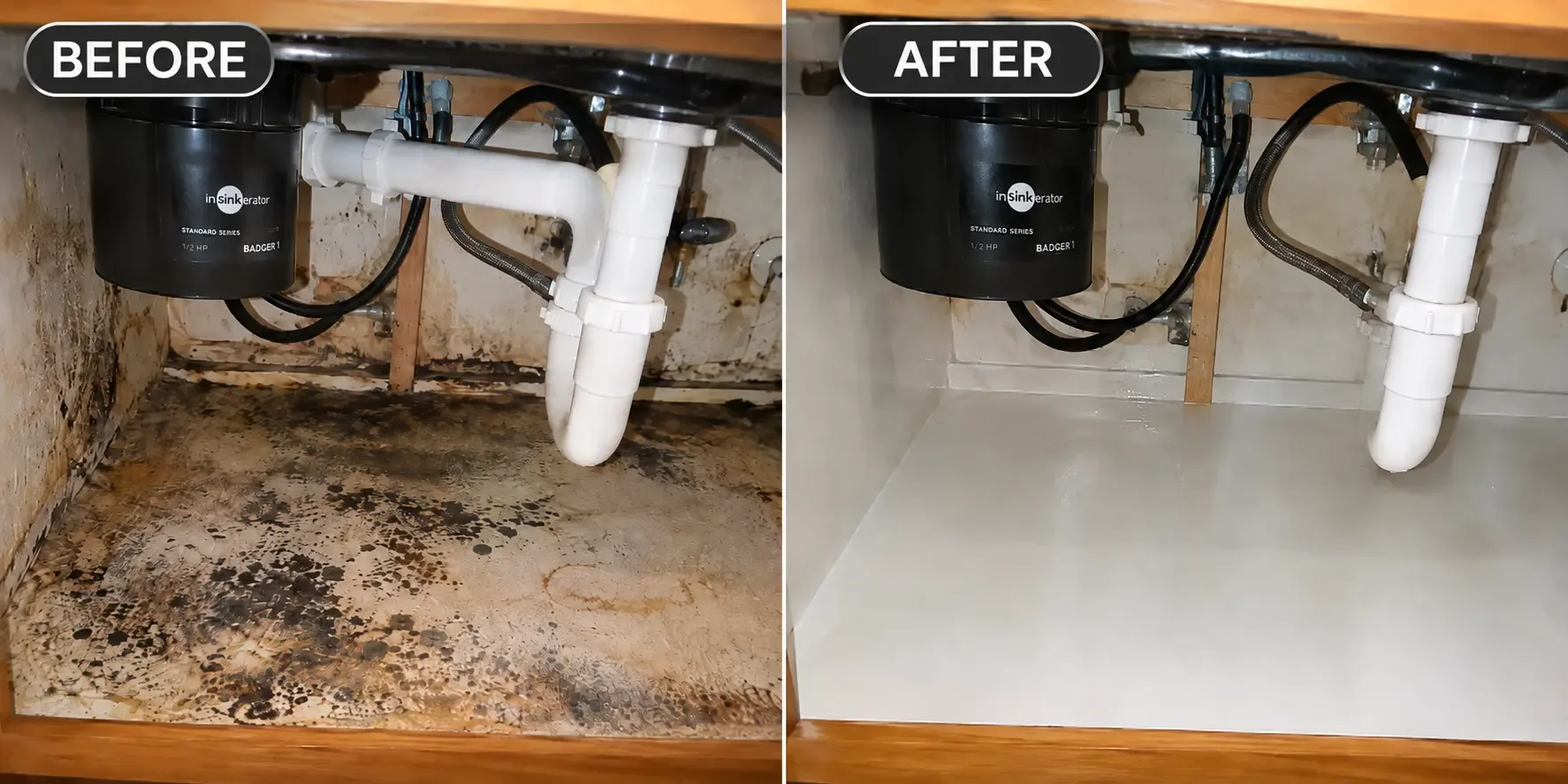
How we handle mold in Palm Springs
1. Inspect and test
We look at the affected area, take moisture readings to see how far the water went, and test when it helps answer a question. If you already have a report from an independent inspector, we work from it.
2. Find and fix the water
Mold comes back if the moisture does. We find the leak, condensation or drainage problem and fix it as part of the job.
3. Contain and remove
We seal off the work area, remove moldy drywall, insulation and other porous materials, and clean the remaining surfaces with HEPA vacuums and an antimicrobial treatment.
4. Dry, check and rebuild
We confirm the area is dry before closing it up, then rebuild: drywall, insulation, paint, baseboards, cabinets or flooring, so the room is finished when we leave.
Palm Springs mold removal FAQ
My Palm Springs home sits empty all summer. How do I avoid coming back to mold?
Most summer mold starts with a leak that runs while nobody is home, so prevention is mostly about water: shut the main water valve when you leave, have the AC condensate line cleared before summer, and have someone check the home every week or two. If you open the house to a musty smell, call before you clean anything so we can find the source first.
Can a flat roof leak cause mold in the ceiling?
Yes. Water from a flat or low-slope roof leak spreads across the top of the ceiling drywall and insulation before it shows as a stain. By the time you see a spot, the area above it is often larger. We open the ceiling only as far as needed, remove the wet material, dry the space and repair the ceiling, and we can coordinate the roof repair so it doesn't happen again.
Do you work on vacation rentals in Palm Springs?
Yes, as long as it is a residential home. We can work around your booking calendar, keep the work area sealed off and give you a clear timeline so you know when the home can take guests again.
What affects the cost of mold removal?
The cost depends on your home: how large the affected area is, which materials are involved (drywall, insulation, cabinets, flooring), how hard it is to reach, whether testing is needed, what it takes to fix the water source, and how much rebuilding is needed afterward. Because no two homes are the same, we don't publish one-size-fits-all prices. We'll visit your home, inspect, and give you personalized pricing with a free on-site estimate. Call or text (951) 292-0703.
Can I just clean mold with bleach?
On a small spot on a hard surface, like tile, cleaning is often fine. On porous materials like drywall, wood and insulation, bleach doesn't reach the mold growing inside the material, and the moisture problem is still there. The EPA's guidance is to fix the water problem, clean hard surfaces, and remove porous materials that are moldy. For areas larger than about 10 square feet, a professional is recommended.