Older homes and aging plumbing in San Bernardino
A large share of San Bernardino's homes were built between the 1920s and the 1970s. Galvanized and cast iron pipes corrode from the inside, old roofs and flashings wear out, and many homes have crawl spaces or raised floors. Leaks in older homes are often slow and hidden, which is exactly when mold has time to grow.
Older homes can also contain materials like asbestos or lead paint that need to be handled carefully before walls and ceilings are opened. We check for that first and plan the work accordingly, then remove the mold, fix the leak and rebuild.
Where we find mold in San Bernardino homes
- Old supply and drain lines: Corroded galvanized pipes and cast iron drains leak inside walls and under floors.
- Raised floors and crawl spaces: Plumbing leaks and poor drainage keep the area under the house damp.
- Aging roofs: Worn shingles and flashing let winter rain into the attic and the tops of walls.
- Bathrooms and kitchens: Original tile, tub surrounds and sink areas with failed caulk and grout let water into the wall.
How we handle mold in San Bernardino
1. Inspect and test
We look at the affected area, take moisture readings to see how far the water went, and test when it helps answer a question. If you already have a report from an independent inspector, we work from it.
2. Find and fix the water
Mold comes back if the moisture does. We find the leak, condensation or drainage problem and fix it as part of the job.
3. Contain and remove
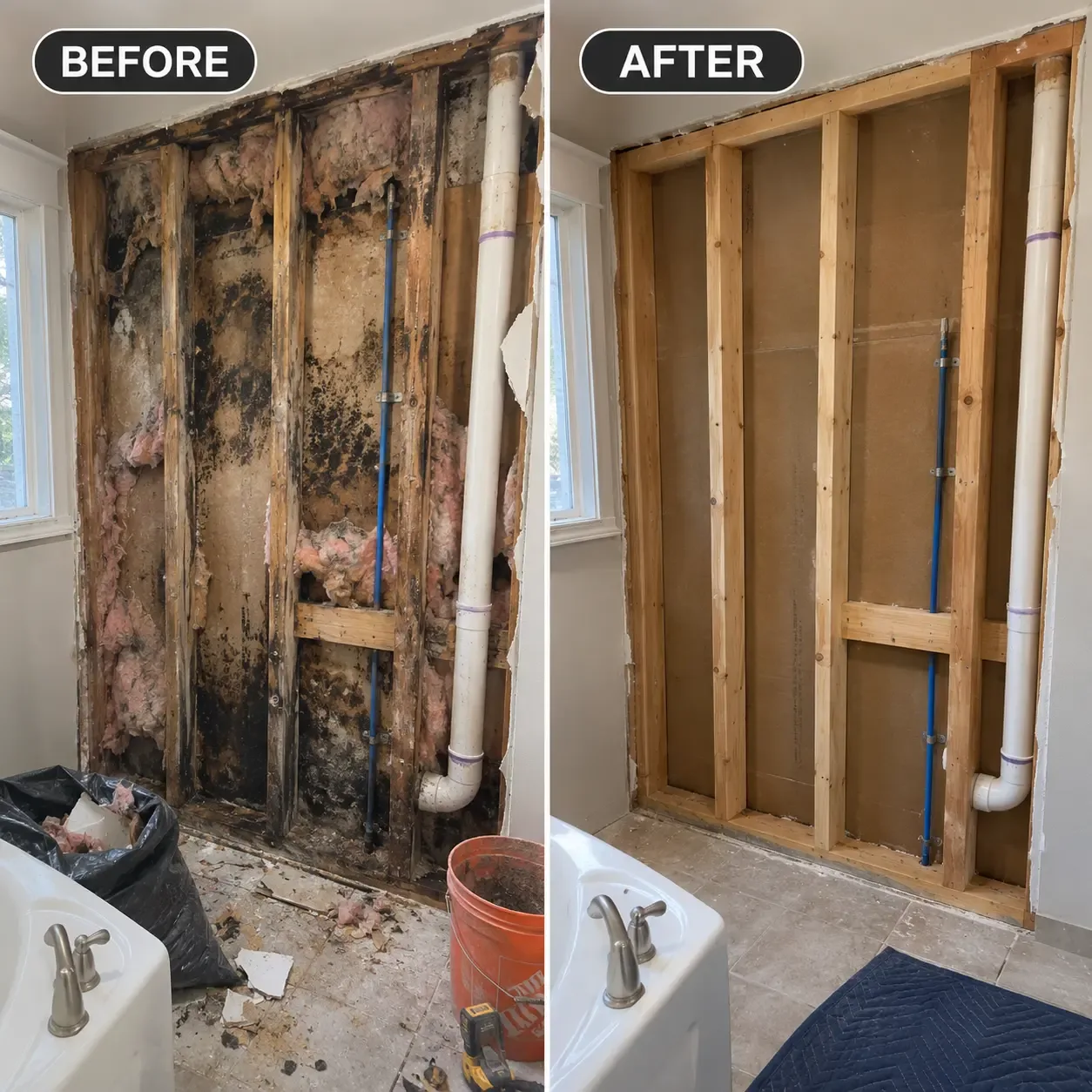
We seal off the work area, remove moldy drywall, insulation and other porous materials, and clean the remaining surfaces with HEPA vacuums and an antimicrobial treatment.
4. Dry, check and rebuild
We confirm the area is dry before closing it up, then rebuild: drywall, insulation, paint, baseboards, cabinets or flooring, so the room is finished when we leave.
San Bernardino mold removal FAQ
My San Bernardino home is old. Do you check for asbestos before opening walls?
In older homes, some materials like certain drywall compounds, ceiling textures, flooring and insulation can contain asbestos. When the home's age calls for it, those materials need to be tested before they are disturbed, and we plan the work around the results.
I smell something musty but can't see any mold. What now?
A musty smell with no visible mold usually means it is inside a wall, under the floor or in the attic. We use moisture readings and a careful inspection to find it, and testing if needed, before opening anything.
Should I replace my old pipes while you're fixing the mold?
If the leak came from corroded pipes, it's often worth replacing the affected section, or more, while the walls are already open. We'll show you what we find and you decide.
What affects the cost of mold removal?
The cost depends on your home: how large the affected area is, which materials are involved (drywall, insulation, cabinets, flooring), how hard it is to reach, whether testing is needed, what it takes to fix the water source, and how much rebuilding is needed afterward. Because no two homes are the same, we don't publish one-size-fits-all prices. We'll visit your home, inspect, and give you personalized pricing with a free on-site estimate. Call or text (951) 292-0703.
Can I just clean mold with bleach?
On a small spot on a hard surface, like tile, cleaning is often fine. On porous materials like drywall, wood and insulation, bleach doesn't reach the mold growing inside the material, and the moisture problem is still there. The EPA's guidance is to fix the water problem, clean hard surfaces, and remove porous materials that are moldy. For areas larger than about 10 square feet, a professional is recommended.