Monsoon storms, winter freezes and rental homes in Twentynine Palms
Twentynine Palms gets sudden summer monsoon storms with heavy rain in a short time, plus cold winter nights. Roofs that have dried out in the sun, gutters packed with dust and grading that sends water toward the house all add up to water getting into ceilings and walls.
Many homes in town are rentals, and many are older homes with crawl spaces. Tenants may not report a small stain right away, and owners who live elsewhere may not see it at all. We find the water, fix the cause, remove the mold and leave the home ready for the next family.
Where we find mold in Twentynine Palms homes
- Roofs after monsoon storms: A short, heavy storm can overwhelm worn flashing and dry, cracked roofing. The ceiling stain often appears days later.
- Grading and drainage: Yards that slope toward the house send storm water against the foundation and into crawl spaces.
- Frozen pipes: Pipes under the house and in exterior walls can split on the coldest nights and leak when they thaw.
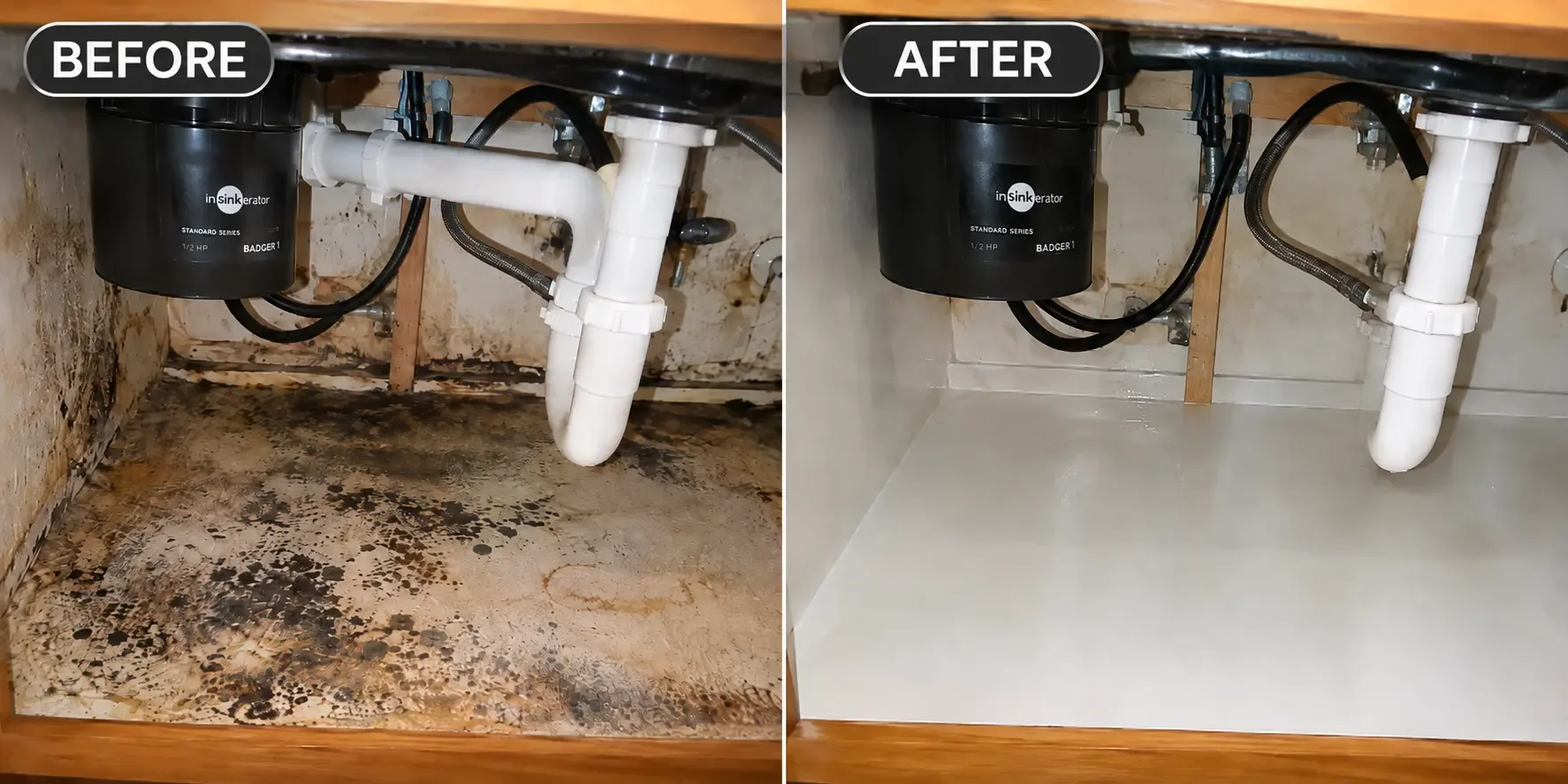
- Rental homes between tenants: Move-out is a good time to check under sinks, behind the washer and around the water heater for slow leaks.
How we handle mold in Twentynine Palms
1. Inspect and test
We look at the affected area, take moisture readings to see how far the water went, and test when it helps answer a question. If you already have a report from an independent inspector, we work from it.
2. Find and fix the water
Mold comes back if the moisture does. We find the leak, condensation or drainage problem and fix it as part of the job.
3. Contain and remove
We seal off the work area, remove moldy drywall, insulation and other porous materials, and clean the remaining surfaces with HEPA vacuums and an antimicrobial treatment.
4. Dry, check and rebuild
We confirm the area is dry before closing it up, then rebuild: drywall, insulation, paint, baseboards, cabinets or flooring, so the room is finished when we leave.
Twentynine Palms mold removal FAQ
I own a rental in Twentynine Palms but live elsewhere. Can you handle it?
Yes. We can do the estimate with your tenant or property manager there, send you photos and a written scope, and keep you updated through the job.
Why did my ceiling stain show up days after the storm?
Water from a roof leak soaks the insulation and spreads across the top of the drywall before it comes through. That's why stains often show up later and are larger than the actual leak. We dry or replace the wet material before mold sets in.
Does the desert heat dry everything out on its own?
Outside, quickly. Inside a wall, ceiling or crawl space, not reliably. Trapped water can stay wet long enough for mold to grow, which is why water-damaged areas should be dried and checked within a day or two.
What affects the cost of mold removal?
The cost depends on your home: how large the affected area is, which materials are involved (drywall, insulation, cabinets, flooring), how hard it is to reach, whether testing is needed, what it takes to fix the water source, and how much rebuilding is needed afterward. Because no two homes are the same, we don't publish one-size-fits-all prices. We'll visit your home, inspect, and give you personalized pricing with a free on-site estimate. Call or text (951) 292-0703.
Can I just clean mold with bleach?
On a small spot on a hard surface, like tile, cleaning is often fine. On porous materials like drywall, wood and insulation, bleach doesn't reach the mold growing inside the material, and the moisture problem is still there. The EPA's guidance is to fix the water problem, clean hard surfaces, and remove porous materials that are moldy. For areas larger than about 10 square feet, a professional is recommended.